
Why authoritarian governments cannot tell you what you can and cannot say

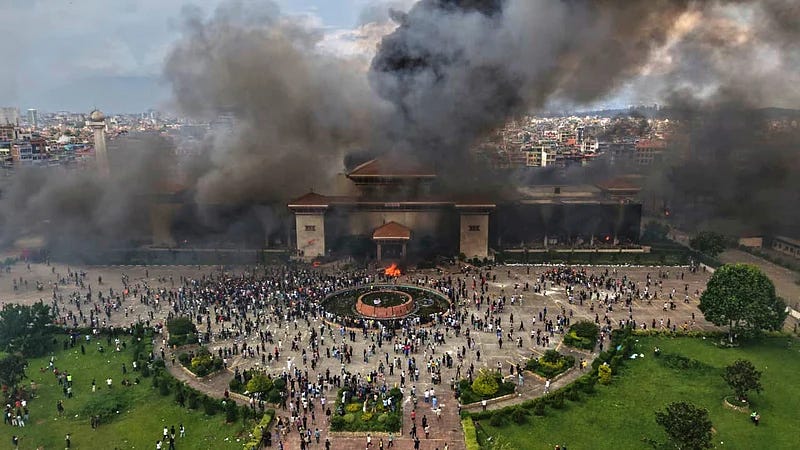
image: https://www.outlookindia.com/
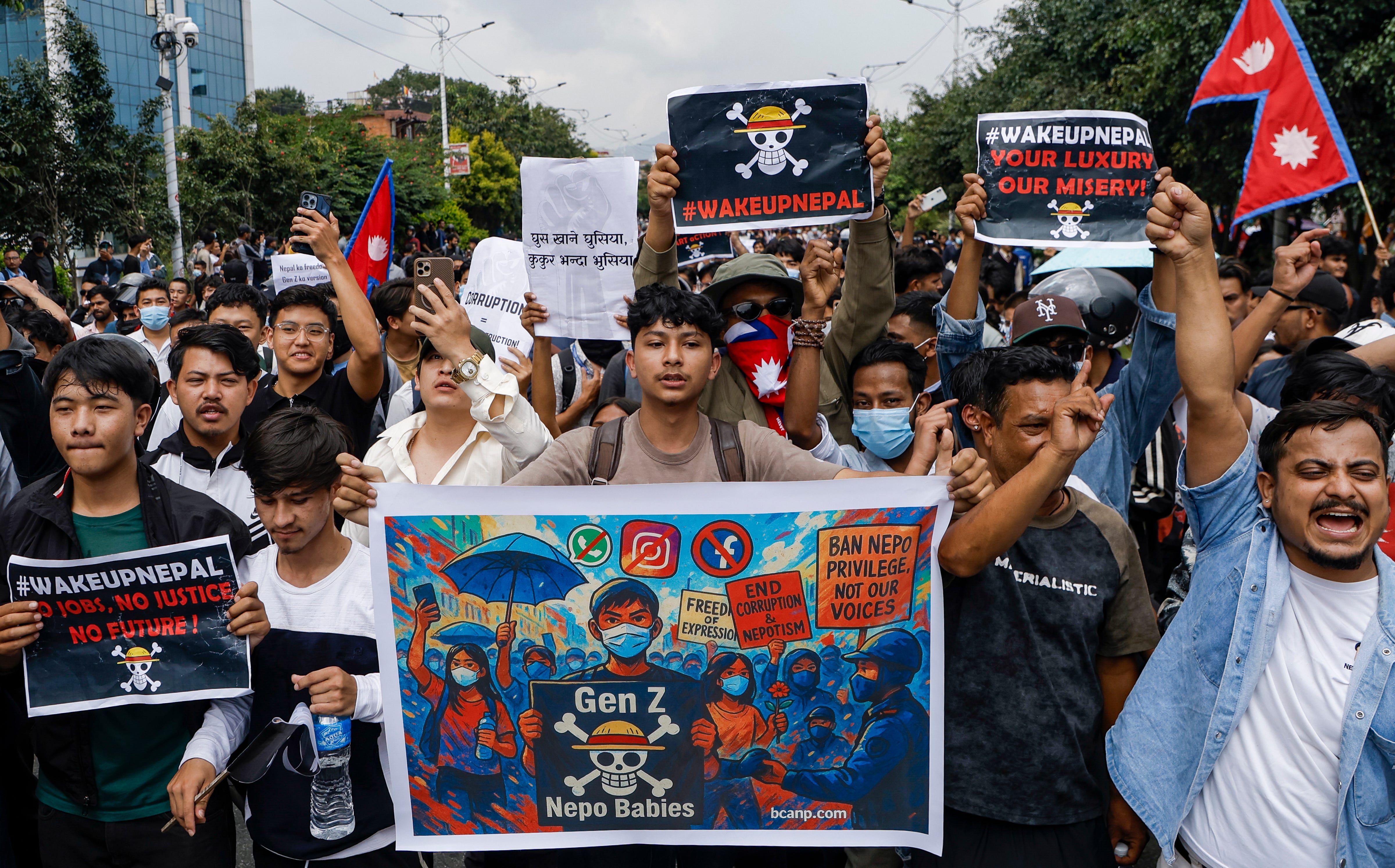
Nepal's Gen Z protests and their use of Discord to select political leadership represents another anti-authoritarian move towards digital democratic participation and triumph over corruption, oligarchy and elites. Thousands of young citizens assembled in online discussion, dubbed a new “national convention,” to determine the next leader of their nation using a messaging platform based in the United States, primarily utilized by gamers, and employed memes such as a skull-and-crossbones symbol from a Japanese anime show.
source: Nieman Reports
This demonstrates how digital technologies enable new forms of political organization that transcend attempts to control institutional boundaries of ‘free speech’ whether in the USA, Russia, China, Uk, Europe or anywhere else around the world.
Deployent of the military into the streets failed miserably.
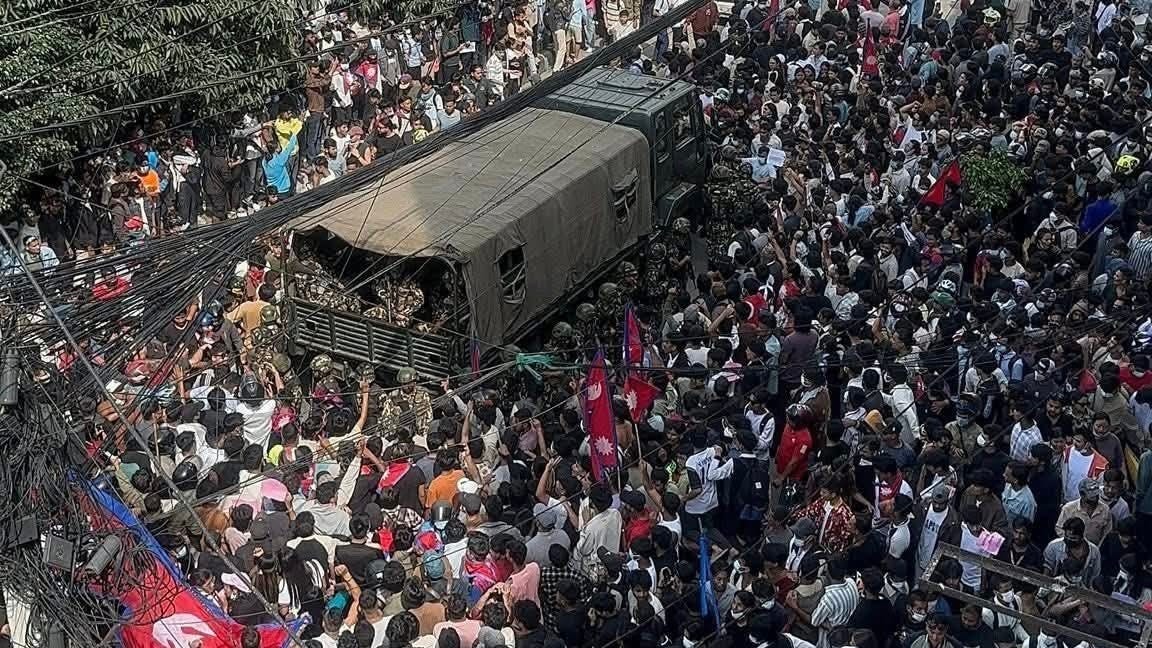
Image: PeoplesDispatch.org
Downloads of virtual private network software — used to circumvent restrictions on the internet — skyrocketed by 8,000% within days. Instead of silencing criticism, it ignited it. Online platforms became underground channels and symbols of defiance.
Thousands of online portals compete for people’s attention. Increasingly, around the world, private outlets, many owned by business elites, are seen as serving their owners’ political or financial interests. Audiences perceive mainstream reporting as politicized and compromised.
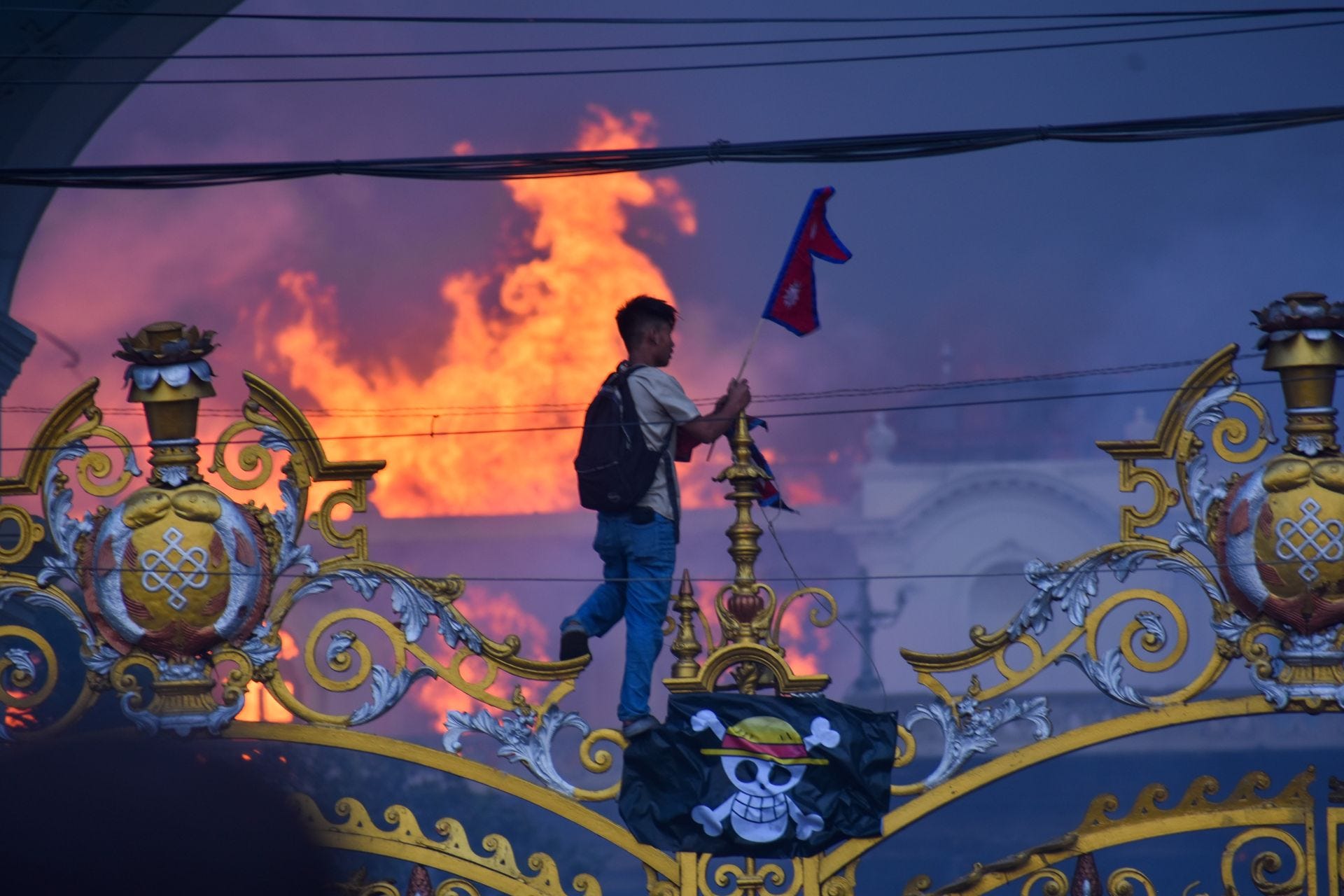
A man hangs a pirate flag after protesters set fire to the seat of the country’s ministries in Kathmandu on Sept. 9, 2025. (Sunil Pradhan/Anadolu via Getty Images).
While mainstream media worked through hierarchies of verification reporting a rapidly unfolding story, citizen-run livestreams, bloggers, and influencers were shaping the narrative. A British travel vlogger who stumbled onto the protests produced a video that got more than 25 million views, dwarfing the combined audiences of national news channels. The mainstream media was suddenly no longer the place where revolutions were being narrated in real time — only where they were confirmed. Some Indian legacy media outlets, aligned with Hindu nationalist tropes, initally did their best to deny the realities.
Nepal’s uprising is not unique. Around the globe, digitally native protest movements are redrawing political maps. They are decentralized, meme-driven, internationally cross-pollinated, and indifferent to conventional political leadership. They distrust not only governments but legacy institutions, including mainstream journalism.
During the youth revolution of the 1960’s revolution in the West, we boomers ironically were prone to announce “never trust anyone over 30”. That ethos of that directive is back, digitally turbo charged.
For politicians globally, Nepal is a warning shot.
#freespeech
#discord
#mainstream media
#EastAsia
#authoritarian
#USA
#Russia
#China
#UK
#Europe
Short, not so sweet, but really raises interesting points.